
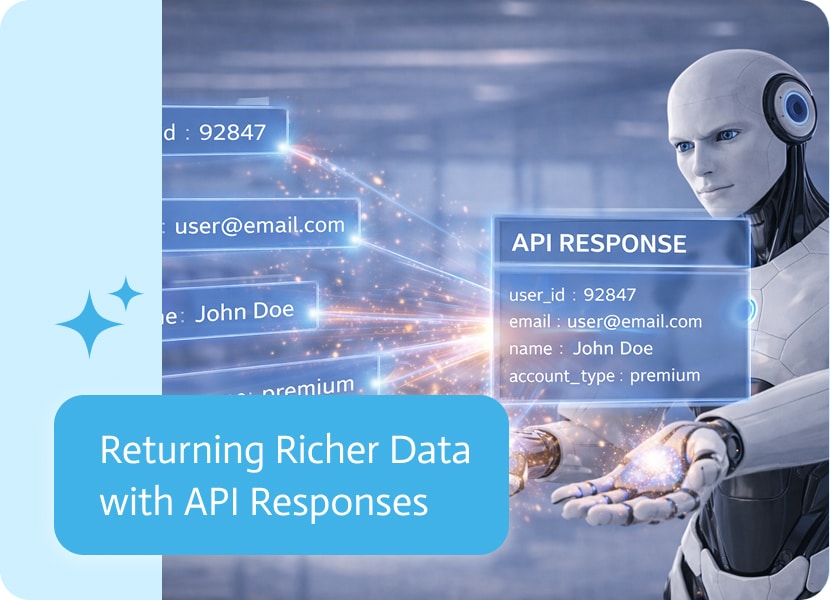

Returning Richer Data with API Responses
As automation becomes more advanced, the need for better communication between systems grows with it. It’s no longer enough to send back a single piece of information—modern workflows often require multiple data points to move forward effectively.
That’s where expanded API responses come in. By allowing multiple fields to be returned in a single response, workflows can become more powerful, efficient, and easier to manage.
Why API Responses Matter in Automation
Whenever systems communicate, they rely on responses to understand what happens next. An API response is simply the information sent back after a request is made.
This response might include:
- A status update
- Key results from a process
- Data needed for the next step
- Confirmation that an action was completed
In automation, these responses are what keep workflows moving. The more useful the response, the smoother the process.
The Limitation of Single-Field Responses
In simpler setups, API responses often return just one main value. While this works for basic tasks, it can quickly become limiting.
For example:
- You may need both a status and a message
- Or an ID along with additional details
- Or multiple values to pass into the next step
When only one field is returned, workflows may need extra steps to fetch or reconstruct missing data. This can lead to:
- More API calls
- More complexity
- Slower executionn
The Challenge: Handling Incoming Data
While receiving data is powerful, it can also introduce complexity. Incoming webhook data often contains multiple fields and values that need to be mapped and organized before they can be used effectively.
Traditionally, this means:
- Manually selecting which data to use
- Mapping fields between systems
- Repeating the same setup for each workflow
As workflows grow, this manual effort can become time-consuming and prone to errors.
Expanding Responses: More Data, Less Effort
With expanded API responses, a single response can include multiple fields at once.
Instead of sending back just one value, responses can now contain a richer set of data—organized and ready to use.
In simple terms:
- One request is made →
- Multiple data points are returned →
- The workflow continues with everything it needs
This reduces the need for additional calls or manual data handling.
What This Enables
Returning multiple fields in a single response opens the door to more capable and streamlined workflows.
- More Context in Every Step
Workflows can make better decisions when they have access to more complete information. - Fewer API Calls
By receiving everything at once, there’s less need to request additional data. - Simpler Workflow Design
With fewer steps required, workflows become easier to build and maintain. - Improved Performance
Reducing extra calls and steps can help workflows run faster and more efficiently.
Real-World Impact
In practice, expanded responses make automation feel more seamless.
For example:
- A request is triggered →
- A response returns multiple useful fields
- Each field is immediately available for the next steps
- The workflow continues without interruption
Instead of piecing together information from multiple sources, everything arrives ready to use.
Building More Complete Automations
As automation evolves, workflows are expected to handle more complexity while staying easy to manage. Expanded API responses help bridge that gap.
By allowing richer, more comprehensive data to be returned in a single response, systems can communicate more effectively—and workflows can operate with greater clarity and efficiency.
It’s a simple shift that makes a big difference: more data where it matters, with less effort required to manage it.

Let’s be completely honest, deploying a fully functional, user-friendly portal can be quite a complex and time-consuming job—especially when it involves integrating with a system…

Remember when getting a website up and running felt like climbing a mountain? Back then, your choices basically boiled down to two tricky options. First,…

HubSpot changed the way businesses work by promoting “inbound,” which means that you should attract customers by giving them value instead of bothering them. But…