
AI Agent Platform for Sage Intacct: The End of the “Month-End” Nightmare
If you work in finance, you know how scary the “close” is. It’s that crazy time when the coffee runs out, the spreadsheets crash, and the variance analysis shows mistakes that take hours to find. Sage Intacct is a fabulous financial management system that the AICPA loves, but it needs inputs to work. Even the best system can’t save your weekend if the inputs are manual, late, or full of mistakes.
The solution isn’t to work faster; it’s to work differently. The solution lies in adopting AI agents. These aren’t just tools; they’re a digital employee workforce that propels you from “Record to Report” to “Continuous Accounting.”
By implementing a specialized AI agent platform for Sage Intacct, modern CFOs can get rid of the old month-end crunch and replace reactive reconciliation with proactive, autonomous financial intelligence.
Meeting Your New “Digital Controller”
What does it mean to have an agent platform in finance?
Instead of thinking of an AI agent platform as software, think of it as a staffing agency for “digital junior accountants.” It is the place where you set up, manage, and define autonomous workers. In addition to doing math, these agents also find their way around. They know the difference between a credit and a debit, and they know which transaction goes with which dimension (department, location, project).
The Audit Difference Between Bot and Agent
A chatbot is a tool for getting information (“Pull the P&L for Q1”). An AI agent is a tool for doing business. The AI agent logs into the system to complete the task. A bot might tell you that an expense report is still waiting for approval.
An agent opens the report, checks the receipts against the policy, makes sure the General Ledger (GL) coding is correct, and approves it if it meets the requirements. If there are any exceptions, the human controller is only notified.
What Sage Intacct Does
The “Ledger” is still the only place to find out the truth about finances. The AI agents are the fast data keepers, making sure that every entry in the ledger is correct, on time, and properly tagged.
The XML Pulse: How AI Agents for Sage Intacct Work
Speaking “Intacct XML”
In “Intacct XML,” the Sage Intacct API is strong but limited. The XML API is the main way that Sage Intacct works with AI agents. An advanced agent platform doesn’t just “dump” text; it organizes data into valid XML requests that Sage Intacct sees as legal transactions. This makes sure that the agent follows the system’s strict rules for checking things. For example, if an account number is not valid, the agent will know right away.
Bidirectional Sync:
The balance sheet bridge finance needs to be in balance. The integration must go both ways.
- Reading the Books: Before processing a payment, the agent checks the funds by pulling data like “Current Cash Position.”
- Writing the Entry: The agent sends the journal entry back to Intacct. This exact connection between Sage Intacct and the AI agent makes sure that your sub-ledgers (AP/AR) always match up with the general ledger.
Safety: The “Web Services” User
You don’t tell anyone your password. In Intacct, you set up a “Web Services User” instead. This lets the AI agent work with a specific slide ID and set of permissions, making sure it stays within its lane (for example, it can make bills but not change bank accounts).
Coding is for Devs, Accounting is for You: No-Code AI Integration Agents with Sage Intacct
The CFO as the Architect
Financial leaders are experts in Excel logic, not Python code. Sage Intacct’s no-code AI integration agents understand this. They have a “Visual Logic Builder” that looks a lot like making a flowchart or a complicated Excel formula.
Logic Blocks for Accountants
You can drag and drop accounting logic on modern platforms: “Trigger: New Invoice Received” -> “Check: Vendor Contract in Intacct” -> “Logic: Does Invoice Match Contract Amount?” -> “Action: Post to AP” OR “Action: Send to CFO for Review.” This gives the controller direct control over automation, which is better than any IT developer at understanding the details of the business.
Speed to Audit
Rules in finance change quickly (ASC 606, IFRS 15). Bots that are hard-coded are a problem. You don’t have to wait for no-code agents to be updated with new tax rules or approval hierarchies.
Best Use Cases: Where the Agents Do Their Best
The “Smart” Combination:
Intercompany transactions are a pain for organizations with more than one entity. Agents can find a transaction in Entity A (like “Management Fee Expense”) and automatically make the same entry in Entity B (like “Management Fee Income”) in Sage Intacct. The procedure gets rid of mistakes when transactions are removed.
Revenue Recognition Scout:
Agents scan sales contracts (from CRM or PDFs) and automatically set up the “Revenue Recognition Schedules” in Intacct. This makes sure that revenue is recognized or deferred based on the specific delivery milestones in the contract.
The Allocations Automator:
Agents can do “dynamic allocations” every day instead of running complicated allocation spreadsheets at the end of the month. They read statistical reports (like “Headcount” or “Square Footage”) and write down the overhead costs for the right departments/dimensions in real time.
Audit Trail Guardian:
Agents can monitor the General Ledger for irregularities, such as duplicate payments or unusual user-made journal entries on Sunday nights. Agents have the ability to immediately flag such issues for internal audit review.
The ROI of Sanity: Combining Sage Intacct and AI Agents
The best thing about integrating Sage Intacct and an AI agent is that it saves the finance team’s sanity, not just money.
- Reduced Days Sales Outstanding (DSO): Automating collection letters based on accounts receivable aging buckets allows you to receive payments more quickly.
- Zero-Touch AP: Not having to manually enter invoices cuts the cost per invoice by a lot and gets rid of mistakes in data entry.
- Strategic Focus: When the “scorekeeping” is done automatically, the finance team can concentrate on “game strategy,” which is financial planning and analysis (FP&A).
Getting the Right Bot for the Job
Sage Intacct is a system with many parts. Your agent platform has to be too.
- Intacct uses “Dimensions” (Department, Class, Location) to keep track of things. Your reporting will break if the agent platform doesn’t let you tag transactions with these dimensions.
- Handling Multiple Entities: Is it easy for the agent to handle more than one entity and currency?
- Smart Event Triggers: Can the agent wake up when certain “smart events” or triggers happen in Intacct?
- GAAP Compliance: Does the platform leave a digital trail that your outside auditors are happy with?
Conclusion
Sage Intacct gives you the advanced financial framework you need, but manual processes are holding you back. AI agents broke that chain, letting your finance department move freely into the age of real-time intelligence.
It’s not about being a better human calculator in the future of finance. It’s about being a better designer of smart systems.
Stop fearing the month-end close and start looking forward to real-time insights. See Noca AI’s financial agents in action and start building the digital workforce that will finally give you your weekends back. Contact us to learn how Noca AI integrates seamlessly with Sage Intacct to deliver continuous accounting reality.
Introducing Make Make (formerly Integromat) is an integration and automation platform built to simplify workflows for businesses of all sizes. It helps users connect various…
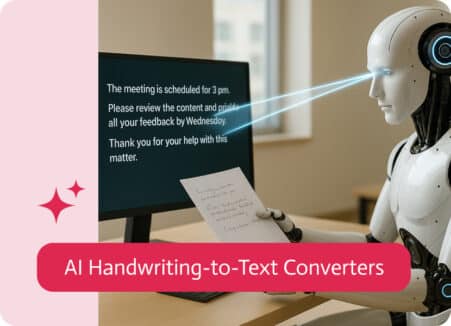
In simple terms, it’s a tool that takes what you’ve written by hand on paper, tablet, whiteboard, napkin, or whatever and converts it into editable,…

Salesforce Priority Integration refers to the seamless connection between Salesforce, the leading Customer Relationship Management (CRM) platform, and Priority, a robust, cloud-based Enterprise Resource Planning…