
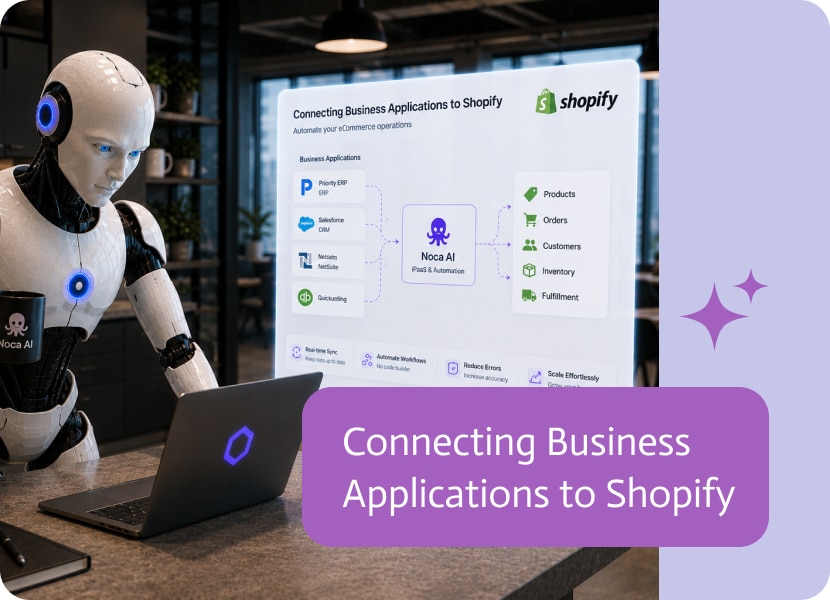

Connecting Business Applications to Shopify
For many businesses, Shopify is more than an online store—it’s the system that manages products, customers, orders, inventory, and the overall shopping experience. As organizations grow, they often need Shopify to work seamlessly with CRMs, ERPs, accounting systems, customer portals, and other business applications.
A native integration makes these connections easier to build and maintain.
Why Use a Native Integration?
Connecting Shopify to other business systems shouldn’t require custom development for every project.
A native integration provides direct access to Shopify data and operations, allowing applications and automations to interact with your store using built-in capabilities instead of custom APIs or middleware.
Automate Your Commerce Operations
Many business processes begin or end with an order.
For example, a new Shopify order might create a customer in a CRM, update inventory in an ERP, trigger a shipping process, send notifications, or generate an invoice automatically. Connecting these systems helps eliminate manual work while keeping information synchronized.
Build Better Customer Experiences
Business applications become more valuable when they can interact directly with your online store.
Customer portals can display order history, internal applications can manage products, and support teams can access customer information without switching between multiple systems. Connecting Shopify to your applications creates a smoother experience for both employees and customers.
Scale Your Store with Connected Systems
As your business grows, so does the need for connected processes.
A native Shopify integration provides the foundation for building automations and applications that work seamlessly with your store, helping you streamline operations and create end-to-end business workflows.

Using monday as a crm works best when the board does more than store data. It should surface signals that change how people behave. A…

Connecting app elements to data and actions can become confusing when several fields or buttons look similar. A form may contain multiple inputs, several “Save”…

We’ve been busy making Noca faster, smarter, and easier to use. This release is packed with improvements, new capabilities, and a few little surprises to…