
How Does Vibe Coding Work And What Exactly Is It?
“Vibe coding” is more than a trend, it’s a radical shift in how software is created today. At its core, vibe coding is the act of turning natural human intent (written or spoken) into working code or functional software, using AI-powered tools that understand context, goals, and structure.
Picture telling your computer, I want a simple dashboard that counts weekly sales, draws a line graph, and pings me if numbers fall below fifty, and, poof, it spins up a live web app for you. No digging through thick manuals, no bashing out page after page of JavaScript, and no sleepless nights hunting down missing semicolons.
That approach is sometimes called intent-driven development or even semantic engineering. Instead of wrestling with formal syntax, you work with plain words that describe your goal. You’re partnering with an AI that speaks that same language, so it charts the technical path while you stay focused on the big picture.
What You Can Do with Vibe Coding
1. Build MVPs in Days, Not Months
If you want to test an idea fast but lack a full dev team, just write out features in simple terms. The system whips up a minimal viable product in hours, letting you gather real user feedback before sinking time and money into code.
2. Design-to-Code Translation
When designers sketch flows in Figma, they can layer quick notes, this button submits a form and shows a success model, and Vibe tools read those notes and then hand back clean front-end code. No waiting for hand-offs, no missed details, and no frustrating game of telephone between design and dev.
3. Internal Business Tools
Operations and admin teams can build dashboards, CRMs, workflow tools, or reporting pages just by saying what they need in plain English. Imagine Airtable working hand-in-hand with ChatGPT while a powerful server quietly does the heavy lifting.
4. Workflow Automation
Tell a platform exactly how a routine task runs–“when a lead fills out this form, send an email, create a task, and ping sales” and it will connect the dots, link the APIs, and switch the automation on in seconds.
5. AI Chatbots & Assistants
Draft a few lines about the chats you want a bot to handle, from password resets to product questions, and the vibe-coding tool will spin up a smart internal help desk or a friendly customer-facing agent.
6. Full-Stack App Development
Cutting-edge vibe-coding platforms, like Noca.ai, can do more than design pretty pages. They build the database, set up login security, link services with APIs, push the whole thing live to the cloud, and never ask you to write classic code.
7. Integrations & Middleware
Need your app to chat with Stripe, HubSpot, Google Sheets, or Slack? Just name the tools and explain the handoff. The vibe-coding engine will map the flows, create the connectors, and save you hours of tinkering.
The Core Technologies Behind Vibe Coding
Large Language Models (LLMs)
LLMs are the real engine behind vibe coding. Models like GPT-4, and the newer versions coming soon, have eaten up oceans of code, docs, and everyday chat. That training lets them grasp your idea even if your web application prompt is sketchy or half-finished. Instead of just turning sentences into code lines, they read between the words, patch the holes, and draft working plans. So if you write, I want a dashboard that shows revenue by month, the model infers a time-series chart, an API call, and some buttons , without you spelling out each part.
No-Code and Low-Code Platforms
No-code and low-code platforms give that freshly minted code a place to live and a way to look pretty. They already stock ready-to-use pieces-forms, databases, login walls-and vibe tools that grab from that library. When an LLM spits out a block of logic, the platform slots it in, stacking screens and server rules without the user ever touching raw text. Services like Bubble, Noca.ai, and FlutterFlow are picking up smart AI hooks, swapping messy snippets for drag-and-drop flows or, sometimes, hiding all the wiring under a clean page.
Natural Language Processing (NLP)
NLP is the magic glue that turns a robot chat into a smooth conversation. It reads what you type, figures out what you want, spots keywords like “calendar,” “sales report,” or “Zapier webhook,” and sorts through any confusion. Because of this tech, the tool can fix small typos, pick up on follow-up requests-Make that table editable, and even ask you for more details when things are unclear. Strip away strong NLP and vibe coding feels jerky; keep it in, and it acts like talking to an engineer who simply understands.
AutoML & Generative AI (GenAI)
AutoML, short for Automated Machine Learning, takes the guesswork out of model building by automatically picking, training, and launching the best machine-learning model for any given job. When paired with vibe coding, it can whip up handy features such as recommender systems, fraud detectors, or live performance dashboards straight from your data.
Generative AI (GenAI) steps in next, crafting everything from website mock-ups and fresh graphics to playful chatbot personalities on demand. Together, these tools make requests like, Build a sentiment analyzer for support tickets or, Generate a mobile-friendly UI for my budget app pop to life in seconds.
Code Generation Systems (Codegen)
Code generation sits at the heart of the process, acting like a skilled translator. After the large language model (LLM) grasps your idea, the codegen layer turns that high-level plan into working code, whether that’s React pages for the front end, Node.js routes for the server, or tidy SQL queries for the database. It double-checks that the code reads well, fits the overall project, and follows best practices like modular design.
More advanced systems now offer full-stack blueprints, resolve package dependencies, and even wire up continuous-integration pipelines so you get not just lines of code but a deployable app right out of the gate.
Put these pieces together, and you have the quiet engine behind vibe coding. They convert everyday language into organized software with surprising speed, accuracy, and a dash of flair, reshaping how we think about writing programs in the first place.
How Vibe Coding Is Changing the Industry
It Breaks the Technical Barrier
Vibe coding makes software development open to almost anyone. Founders, marketers, designers, and project managers can build their ideas without waiting on engineers. This change is already shifting team models and speeding up timelines.
It Speeds Up Development by Orders of Magnitude
What once took months now takes days. Iterations that filled a sprint now wrap up in a single afternoon. Tight feedback loops cut time-to-market and ease burnout for everyone involved.
It Moves Developer Work from Syntax to Strategy
Dev teams spend less energy on boilerplate and more on edge cases, performance, and security. Their new role is to curate, spot-check, and craft clever solutions around what AI suggests.
It Supercharges Creativity and Innovation
Low-cost prototypes invite fast experiments and rapid failures, and that encourages bold ideas. Teams no longer burn budgets waiting for dev queues, so innovation happens almost on demand.
It Redefines Roles Across Tech Companies
Product managers add coding to their toolkit. Designers become front-end engineers by default. Developers shift to high-level thinking and act as AI copilots. Executives, too, can jump in and build tools that streamline teams.
It Bridges the Global Talent Gap
Elite developers are rare, yet app ideas pour in from everywhere. Vibe coding gives talented people in under-resourced areas the tools to build world-class apps.
Rewires the Education Path
Do you really need a computer science degree to build an app these days? The answer is a clear no. Vibe coding platforms now act like mini bootcamps, letting anyone learn by doing, prompting, or launching live projects instead of wading through dry textbook theory.
Drives Down Cost of Innovation
Gone are the days when you thought you needed a quarter-million dollars in engineering fees just to test an idea. Thanks to vibe coding, a basic prototype can cost a few hundred bucks, or nothing at all if you stick with free-tier tools and open assets.
Real-World Impact
- Startups are launching with one or two founders and zero full-time coders.
- Enterprises are handing simple builders to non-tech teams, clearing up backlogged developer queues.
- Agencies are vibe coding client solutions at record speed, turning requests into live products in days.
- Teachers are piecing together custom learning platforms without bringing on expensive developers.
- Governments and NGOs are rolling out citizen services fast, sidestepping the usual IT bottlenecks.
Noca: The Platform Making It Happen
Noca makes coding fun! Just tell it what you want in plain English, and the software appears. No need to be a coding whiz!
Want to whip up a dashboard, automate stuff, or make a quick web app? Noca turns your ideas into real code with its smart engine. Tweak things as you go by simply chatting with the platform. Forget about complicated code editors!
Noca takes care of the boring stuff, plays well with other tools, and even handles the behind-the-scenes logic. It’s awesome for startups, teams, and anyone flying solo who wants to build things fast and smart.
The Takeaway
Vibe coding isn’t just another app on the market; it really is a new way of working. What once felt like science fiction, talking to a machine until it builds what you want, is happening right now.
For companies, that speeds up projects, makes tech cheaper, and opens the door to people who never learned to code. Creators face fewer roadblocks, and pro devs can stop grinding on boilerplate and focus on big-picture problems. The fresh message is clear: knowing how to describe an idea is now more valuable than typing line after line of code.
Code used to limit us, now only our imagination does. So, if you have a concept, just vibe it, and watch it come to life.
What is Make? Make is an integration and automation platform designed to simplify and streamline workflows for businesses of all sizes. By enabling seamless connections…
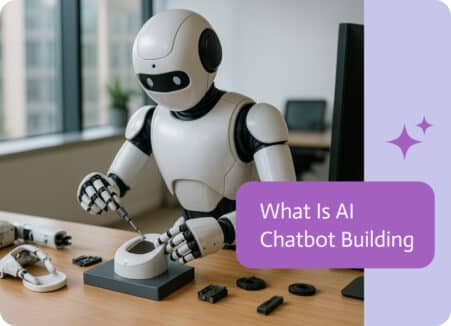
They’ve been sneakily popping up everywhere, haven’t they? Now, they’re hard to miss, popping up all over the internet. Seriously, whether you’re buying stuff online,…
AI voice agent services for business are the answer that is making the “Please Hold” symphony a thing of the past. We’ve all been there….