
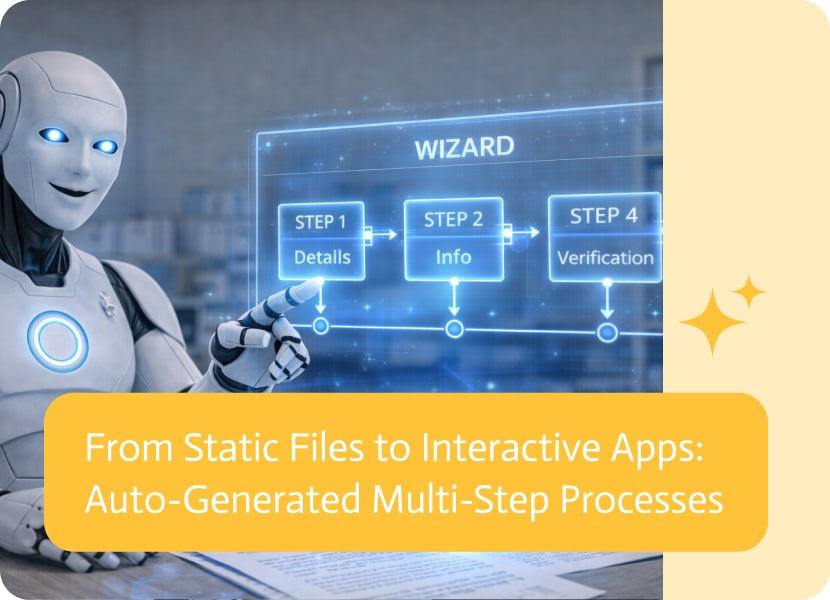
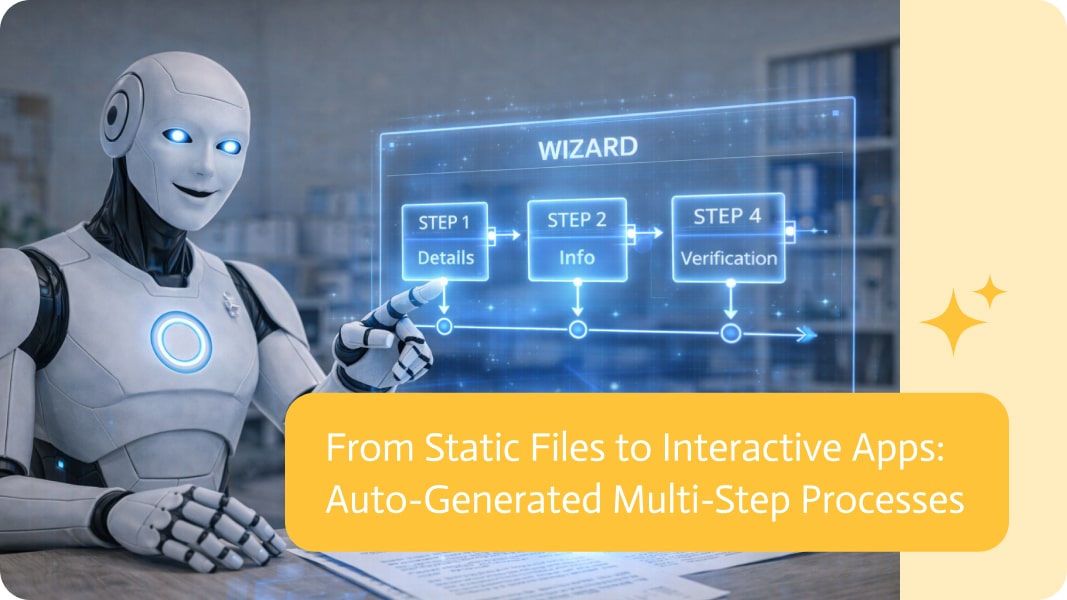
From Static Files to Interactive Apps: Auto-Generated Multi-Step Processes
Converting a complex document into a functional digital workflow has traditionally been a manual, time-consuming task. However, with the evolution of AI, the transition from a static PDF to an interactive web app is now automated. By utilizing auto-generated multi-step processes, organizations can turn dense information into user-friendly interfaces in seconds.
The Power of the “Stepper” UI
A “stepper” is a visual navigation tool that breaks a long, complex task into smaller, digestible pieces (Step 1, Step 2, etc.). For any AI agent platform, this is essential for maintaining a high-quality user experience. Instead of overwhelming a user with a massive form, a multi-step process guides them through one section at a time, collecting necessary input at every stage.
This approach is ideal for:
- Onboarding Flows: Guiding new users through setup one phase at a time.
- Complex Applications: Breaking down loan applications or insurance claims into logical segments.
- Guided Troubleshooting: Helping users solve technical issues through a structured path.
How AI Transforms PDFs into Workflows
The most innovative part of this technology is the ability to use a document as a blueprint. By simply uploading a PDF—such as a government form, a technical manual, or a business questionnaire—the AI analyzes the structure and content to:
- Identify Key Steps: Recognize where one section ends and another begins.
- Extract Input Fields: Determine what information needs to be collected from the user at each point.
- Generate the Interface: Automatically build a built-in stepper UI without requiring a developer to write manual prompts or structure the code.
Why Automation Beats Manual Configuration
Building these flows manually used to require significant time spent on logic mapping and UI design. Automating this process provides:
- Instant Prototyping: Go from a paper-based process to a live web app almost instantly.
- Zero-Prompt Structuring: You don’t need to be an expert in prompt engineering; the AI understands the document’s intent and organizes it logically.
- Scalability: Easily convert dozens of legacy documents into interactive bots or applications with minimal effort.
By bridging the gap between static content and active automation, these multi-step processes ensure that your AI worker is not just displaying information, but actively facilitating work.
We are living in a world where imagination has no limits. AI is rising and creative tools are transforming the way artists, writers and creatives…
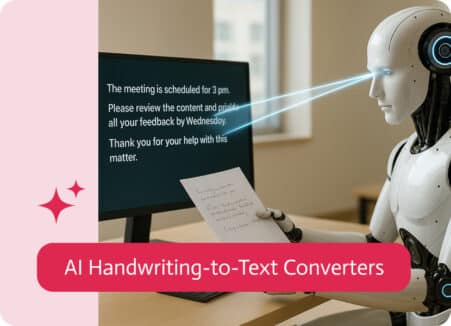
In simple terms, it’s a tool that takes what you’ve written by hand on paper, tablet, whiteboard, napkin, or whatever and converts it into editable,…
Google Docs is where work gets drafted, reviewed, and then quietly forgotten in a folder full of good intentions. The gap is not writing, it…