
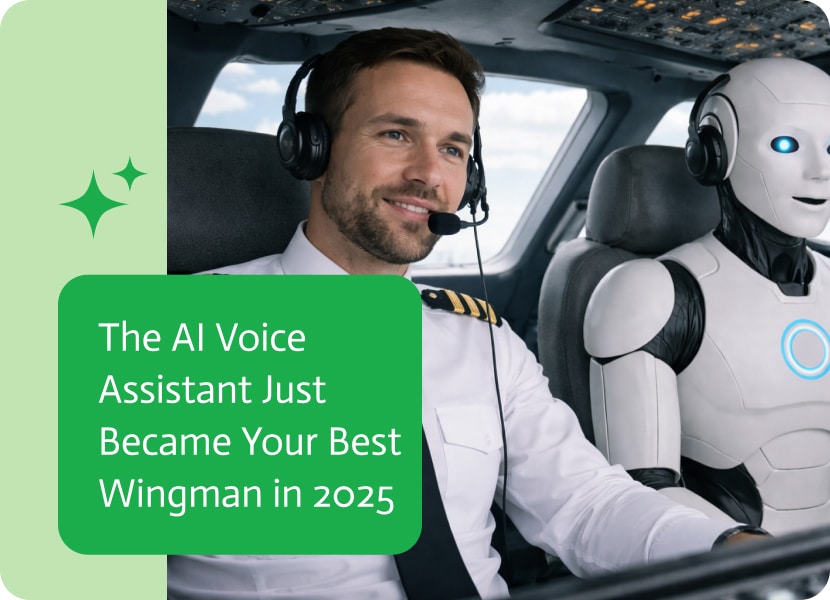

The AI Voice Assistant Just Became Your Best Wingman in 2025
Do you remember the first time you kindly requested an AI voice assistant to tell you a joke? It was probably in 2011. The technology was brand new and full of promise, you had it all in your pocket. You and your friends crowded around the phone, out of breath with excitement, waiting for the coming years of AI to blow your mind.
And what did we do? We laughed. And not because it was funny, but because it talked back. It was a trick. For a brief, bright moment, we felt like Tony Stark talking to JARVIS. But then the novelty wore off. We knew that if we asked it anything more complicated than “What’s the weather like in London?” it would freak out and offer to look up “What’s the meaning of love, and why is my toast burning?”
An AI voice assistant was nothing more than a fancy egg timer for a long time. We used to show it off at parties or use it to change songs while we did the dishes. But everything will change if you look away for even a second.
As we were getting angry that our smart speakers couldn’t understand our morning mumbles, the technology went through a huge, silent change. We used to have pre-programmed responses, but now we possess LLMs, which can understand subtleties, semantics, as well as humor. AI voice assistants have moved from the kitchen counter to the boardroom, where they have gone from being passive listeners to the best wingmen for both our hectic personal lives and our high-stakes business operations.
The Personal Assistant
Taking care of the chaos (and the fear of death)
Life isn’t as much of a “journey” for the modern consumer as it is a frantic race to keep things going. AI voice assistants are a sort of artificial conduit that keep this mess flowing in an orderly fashion.
The End of the Interface
The graphical user interface (GUI) is slowly dying in our homes. Why do you have to tap a screen six times to set an alarm when you could just say it out loud? What makes AI voice assistants interesting to audiences is that they make things more convenient. It makes you lazy, and that’s a good thing.
We use them to keep track of calendars that look like messed-up Tetris games. We yell things at them while we’re elbow-deep in dishwater, like “Add rice to the shopping list,” even though we know we’re going to ignore the rice and buy dinosaur nuggets instead. But an assistant doesn’t judge. It only adds the quinoa.
The Therapist in the Speaker
There is a stranger, more psychological side to why we use these tools. We have begun to use them for therapy and friendship that isn’t too serious. It all sounds a little dystopian if you ask me.
However, it aids us in so many ways, it tells us the weather so we know what to wear and the traffic so we know how late we’ll be, and it plays music to help us sleep. It has turned into our brains’ external hard drive, holding all the useless information like conversion rates and recipe ingredients, so we can save our mental energy.
The Business Suit Up
From the kitchen to the boardroom
People were busy asking their speakers to make fart noises, which, sadly, is still a popular feature. Meanwhile, the business world was quietly planning a revolution.
For a long time, the “business” version of a voice assistant was a nightmare. It was that awful Interactive Voice Response (IVR) system on the customer service line that said, “I’m sorry, I didn’t catch that.” Did you say you want to end your whole life?
That time is over. The AI voice assistant has gotten serious and is now doing real work.
Agentic AI’s Bloom
We are moving from “Chatbots” to “Agents.” This is a noteworthy difference.
- A chatbot can talk. It gets information. It’s a librarian.
- An agent does something. It does things. It is a contractor.
We aren’t talking about checking the weather in the business world. We’re talking about automated agents that take care of everything from start to finish. Think of a situation in a logistics company. A fleet manager asks their AI voice assistant, “Where is Client X’s shipment, and why is it late?”
The assistant doesn’t just read a number for tracking. It:
- Gets the truck’s GPS data.
- Check it against local traffic and weather patterns.
- Finds a storm in the Midwest.
- Sends the client an email to say sorry for the delay and give them a new time when they can expect to arrive.
- “Do you want me to send this?” the employee asks the manager.
This is the change from getting data passively to solving problems actively.
The Meeting That Should Have Been an AI Summary
Zoom rooms and Teams calls are killing productivity at work. The AI voice assistant has become the best secretary. Tools can now listen to a strategy meeting that lasted an hour and had three people arguing about font colors. Within seconds of the call ending, they can make a short summary, a list of things to do, and calendar invites for the next meeting.
It goes after workers who “forgot” to send in their status reports. It can handle complicated business systems (ERPs, CRMs, HR portals) that would make an intern cry. It is the only employee who works all the time, doesn’t drink coffee in the break room, and never complains about the air conditioning.
Please Respect My Privacy
We can’t write a love letter to the AI voice assistant without first talking about the feeling that we’re being watched, or rather, heard.
The “Always Listening” Fear
There is a lingering, Orwellian fear that while we are venting about our boss in the privacy of our living room, our smart speaker is taking notes, highlighting the profanity, and forwarding it to HR or an advertiser who wants to sell us stress balls.
This is the biggest problem that needs to be solved before most people can use it in sensitive fields. It is not acceptable for an AI voice assistant to send client information to a public cloud server to be processed if it is going to work in a law firm.
The Move to Local Processing
The answer from the industry is to move toward “Edge AI,” which means processing things locally. This means that the AI’s “brain” is on the device itself, not in a server farm on the other side of the world. The chip in your laptop or phone processes the voice commands you give it.
This is not something that businesses can talk about. An AI agent that deals with sensitive client data needs to be very secure. “Always-on” fears are being replaced by “always-secure” rules. We are seeing the rise of private, siloed LLMs trained only on a company’s own data and never go online. This way, your trade secrets won’t become public knowledge just because you asked your assistant to get lunch during a secret strategy meeting.
The Future is a Vibe: Noca and the Era of End-to-End Execution
We need to talk about how we use software itself if we want to know where the AI voice assistant is going in the future. We’re going from “clicking buttons” to “stating intent.”
This is where innovators like Noca are changing the rules with a new idea that sounds like it belongs in a music studio but is actually changing the way businesses use technology: Vibe Coding.
The Noca Difference
Noca’s AI voice agent uses this idea to help businesses get things done. There’s more than just a chatbot that gives you a piece of Python code to copy and paste. It is an engine that runs everything from start to finish.
Let’s say you’re in charge of a business and need a new tool for the office. You need a dashboard that gets sales data from Salesforce, compares it to inventory levels in Shopify, and sends a Slack message to the supply chain manager when stock is low.
You used to have to write down what you needed, hire a developer, wait six weeks, test it, find bugs, and then wait another two weeks. With Noca, all you have to do is tell the AI voice assistant, “I need a vibe so my sales team knows right away if we’re running out of stock based on how fast the deals are coming in.”
Noca knows what you mean (the vibe). It knows the situation (the tools you use for your business). Then it:
- Writes the code in the background.
- Links the APIs for Salesforce, Shopify, and Slack.
- Puts the solution into action.
It does the hard work. It’s the difference between asking an assistant to remind you to make a tool and asking them to make it. Noca is closing the gap between natural language and functional software by turning “I wish we had a way to track X” into “Here is the dashboard for X.”
This is the best way to make software available to everyone. You don’t need to know C++ or Python to make solutions anymore. All you need is to speak English (or any other language) and know exactly what you want.
Conclusion: The Co-Pilot That Must Happen
We have reached the end of the road. People were skeptical in the early 2010s because voice commands didn’t work and jokes were misunderstood. But that skepticism has gone away. We can’t live without the AI voice assistant anymore. It’s not that we can’t; it’s just that the world has gotten too fast, too full of data, and too complicated for us to figure out on our own.
In the world of consumers, they are our DJs and our memory banks. In the business world, they are our analysts, our secretaries, and, thanks to innovators like Noca, our software engineers.
From clunky scripts to conversational intelligence, why businesses are all-in on AI support. For a long time, dealing with customer service has felt more like…
The Leads API is the primary tool for external systems like noca.ai to create and manage records for potential customers who have shown interest in…
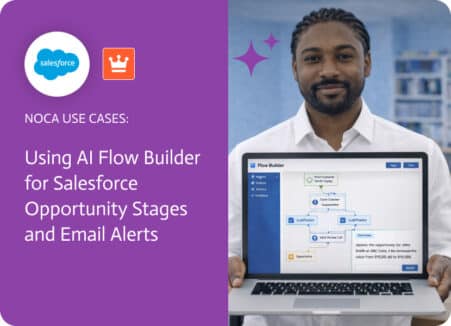
Salesforce opportunity stages are the language of your pipeline, but they’re also a frequent source of “when did that happen?” moments. Stage changes can occur…