
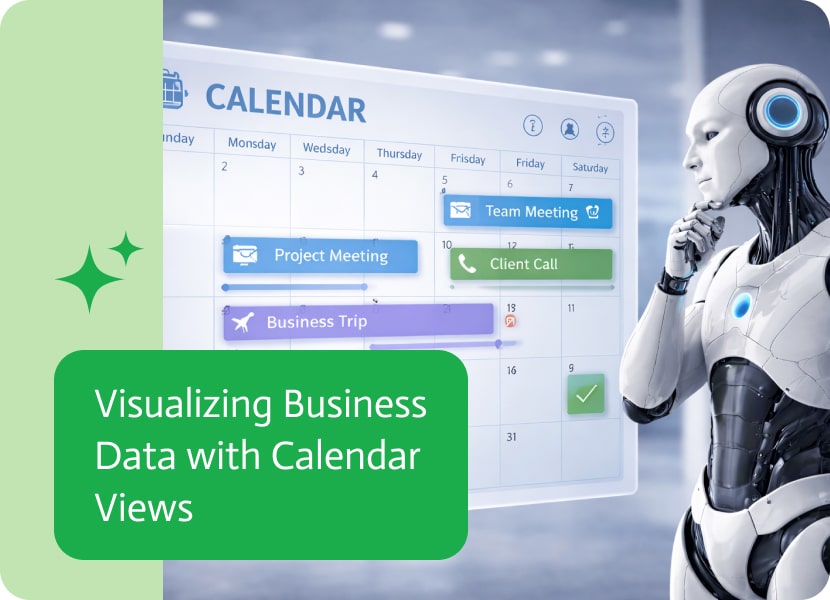

Visualizing Business Data with Calendar Views
In many organizations, important business activities are closely tied to time. Sales meetings, project milestones, customer follow-ups, delivery schedules, and financial events all happen on specific dates and require clear visibility.
While systems such as CRM and ERP platforms store large amounts of structured data, understanding that information often becomes easier when it is presented in a time-based visual format. Calendar views offer a powerful way to transform raw records into something teams can quickly understand and act upon.
Why Time-Based Visibility Matters
CRM and ERP systems typically organize data in lists, tables, or dashboards. While these formats are effective for storing and managing records, they do not always provide a clear picture of when activities are scheduled to occur.
Viewing business data within a calendar can help teams:
- Understand upcoming activities and deadlines
- Track customer meetings and follow-ups
- Monitor project timelines
- Visualize operational schedules
- Identify overlaps or potential conflicts
By mapping records onto a calendar, teams gain a clearer perspective on how different activities are distributed across time.
Connecting Business Systems to Calendar Views
When records from CRM or ERP systems can be displayed within a calendar interface, organizations gain a new way to interact with their operational data.
For example, records such as:
- Sales opportunities with expected closing dates
- Customer appointments or service visits
- Project tasks and milestones
- Delivery schedules or financial deadlines
can all be visualized within a calendar environment. This transforms static data into a dynamic timeline that teams can easily navigate.
Instead of searching through lists of records, users can immediately see what is happening today, tomorrow, or weeks ahead.
Improving Planning and Coordination
Calendar-based views can also improve collaboration across teams. When important business records appear within a shared timeline, different departments gain a clearer understanding of how their activities relate to one another.
For example:
- Sales teams can track upcoming customer engagements
- Operations teams can plan around delivery schedules
- Finance teams can monitor billing or payment timelines
- Project teams can coordinate milestones and deadlines
This shared visibility helps reduce miscommunication and makes it easier to plan resources and workloads.
Turning Data into Actionable Insight
One of the biggest challenges with enterprise systems is turning stored data into actionable insight. While CRM and ERP platforms collect valuable information, presenting that data in the right format can make a significant difference in how it is used.
Calendar visualization provides a simple but powerful way to highlight patterns, priorities, and upcoming activities.
Instead of interpreting rows of data, teams can quickly understand what needs attention based on the timeline of events.
Making Business Data Easier to Work With
As modern applications continue to evolve, organizations are looking for ways to make their business data more accessible and easier to interpret.
Displaying CRM and ERP records within calendar views helps bridge the gap between raw operational data and day-to-day planning. By bringing time-based visibility to business records, teams can stay organized, anticipate upcoming tasks, and manage their workflows more effectively.

In today’s fast-paced business world, seamless integration between different systems and partners is essential. B2B integration enables companies to automate and streamline operations, enhance collaboration,…

In the rapidly evolving world of digital business, maintaining real-time, effective communication with customers is more critical than ever. The Salesforce WhatsApp integration bridges the…

Choosing the right iPaaS solution is crucial for optimizing business operations. Make (formerly Integromat) with its visual interface and customizable AI automation is ideal for…