

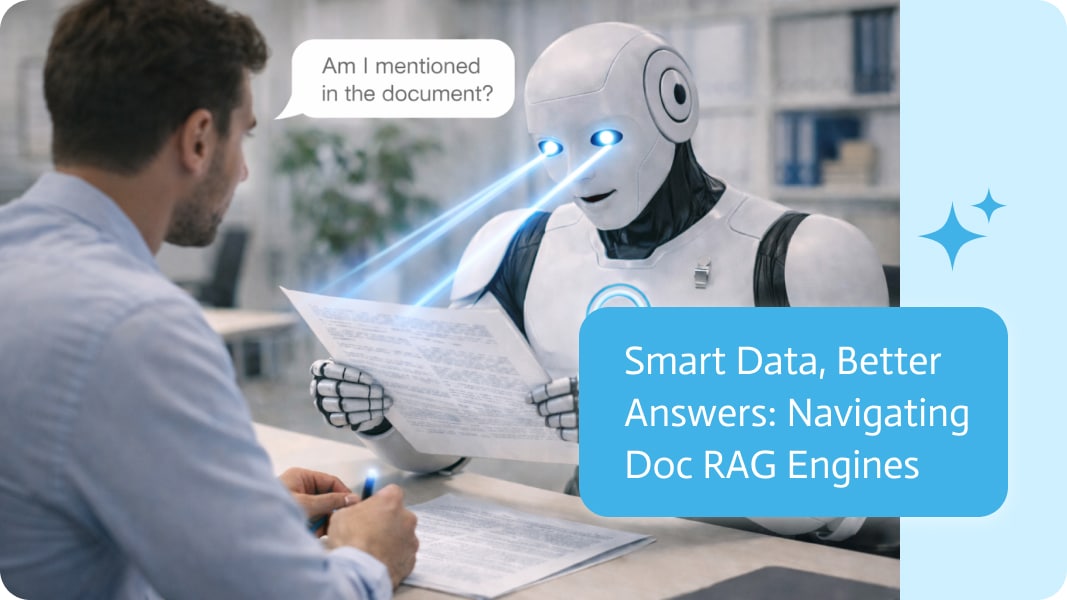
Smart Data, Better Answers: Navigating Doc RAG Engines
In the world of AI, having the right information at the right time is everything. This capability is Doc RAG (Retrieval-Augmented Generation)—the technology that allows an AI to “read” specific files and provide answers grounded in your data rather than general knowledge.
What is Doc RAG?
If you’ve ever used a chat interface or an AI agent to ask questions about a PDF or a company handbook, you’ve used RAG (Retrieval-Augmented Generation). It’s the “brain” that looks through your documents to find the exact answer you need, ensuring the AI doesn’t just guess, but speaks from your actual data.
Why Engine Choice Matters
Not every document is structured the same way. A 200-page technical manual requires a different retrieval strategy than a collection of short customer feedback forms. By offering a choice of RAG engines, the platform ensures that an AI worker can be optimized for the task at hand.
- Engine Comparison::
Users can compare how different engines interpret the same dataset. This helps in identifying which version provides the most accurate and contextually relevant answers for a specific web app. - Data-Specific Selection::
Certain engines excel at keyword matching, while others are better at understanding the semantic meaning behind a query. The engine can be selected based on the complexity and format of the source documents. - Improved Accuracy::
By selecting the engine that best fits the data, the risk of the AI missing key details is reduced, leading to more reliable bots and automated products.
The Doc RAG engines are native components of the Flow Builder and the ability to select between engines allows for a perfect balance of speed and precision.
Instead of a one-size-fits-all approach, this flexibility allows an AI agent to deliver answers that are grounded in the actual content of files, providing a more professional and trustworthy experience for the end user.
Salesforce workflows tend to look clean right up until the moment they touch finance, fulfillment, or approvals, then the “simple update” turns into three teams…
Managing Educational Content The HubSpot Course Object is a specialized feature within the CRM. It is designed to create, manage, and track structured educational or…
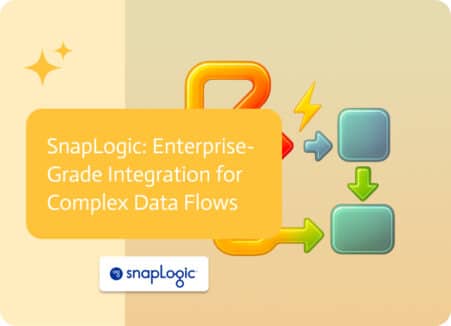
In today’s rapidly evolving digital landscape, businesses face the challenge of connecting a growing number of applications, data sources, and devices. For medium to large…